
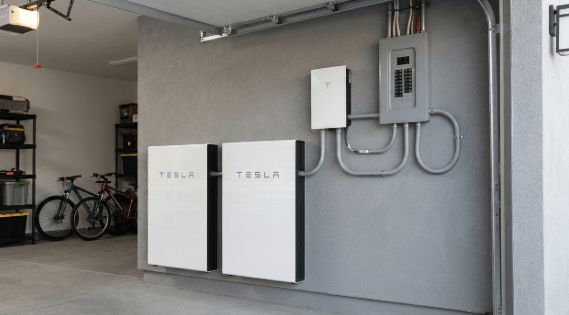
Home energy storage has undergone a remarkable transformation over the past decade, and few products have driven that change more visibly than the Tesla Powerwall. What began as a niche technology for early adopters has become a mainstream choice for Australian homeowners seeking to reduce their energy bills, increase their resilience, and reduce their reliance on an ageing electricity grid.
The Powerwall arrived at precisely the right moment for Australian consumers. With electricity prices among the highest in the developed world and solar installations already widespread, there was a clear and immediate application for a high-quality home battery that could store surplus solar energy and dispatch it at the times when it is needed most.
What the Tesla Powerwall offers homeowners
The Tesla Powerwall is a wall-mounted lithium-ion battery system with an energy capacity of thirteen and a half kilowatt-hours. Designed for whole-home backup as well as daily cycling, it integrates seamlessly with solar panel systems and the household grid connection. Its sophisticated energy management software optimises when to store, use, and export energy based on tariffs and household consumption patterns.
The Powerwall’s gateway device is central to its functionality, continuously monitoring energy flows across the solar panels, battery, and grid connection. This real-time monitoring enables the system to make intelligent decisions about energy routing, and it provides homeowners with detailed visibility of their energy usage through the Tesla app, which displays generation, consumption, and battery state of charge at any time.
The design and engineering quality of the Tesla Powerwall sets it apart from many competing products. Its IP67 weatherproof rating means it can be installed indoors or outdoors, in a garage, on an exterior wall, or in a dedicated plant room. The unit’s clean aesthetic, compact footprint, and ability to be stacked for greater capacity give installers and homeowners considerable flexibility in how the system is configured.
How the Powerwall works with solar panels
For most homeowners, the primary use case for a Powerwall is storing excess solar energy generated during the day for use in the evening. Without storage, this energy is exported to the grid at a relatively low feed-in tariff. With a Powerwall, that same energy is available for use within the home at full retail value, effectively multiplying the financial return from a solar installation.
The Powerwall’s Time-Based Control mode takes this a step further by learning a household’s energy consumption patterns and the applicable electricity tariffs, then optimising when to charge from solar, when to discharge, and when to draw from the grid. In areas with time-of-use tariffs, this capability can deliver significant bill savings beyond what standard solar would achieve alone.
The backup capability of the Powerwall is also highly valued by Australian households. During a grid outage, the Powerwall automatically isolates the home from the grid and continues to power essential circuits, seamlessly and without interruption. This capability is increasingly relevant as extreme weather events become more frequent and grid reliability in some regions comes under greater pressure.
The financial case for a Powerwall installation
The financial case for a Powerwall depends on a household’s electricity usage profile, solar system size, and applicable tariffs. Households with high evening consumption, high retail electricity prices, and low feed-in tariffs see the most favourable economics. In these circumstances, payback periods of seven to ten years are achievable, with the battery expected to continue performing well beyond that point.
The solar industry has grown rapidly across Australia, creating substantial demand for skilled tradespeople and technical staff. The challenges facing renewable energy businesses in staffing their operations share much in common with broader workforce pressures, as organisations managing recruitment in Perth and other major cities have experienced. Finding and retaining qualified installers and technicians remains one of the significant operational challenges for growing solar businesses.
State government rebates and virtual power plant programs can significantly improve the financial case for Powerwall installations in eligible states. By enrolling in a virtual power plant, homeowners allow the energy provider to access a small portion of their battery’s capacity during grid stress events in exchange for financial benefits. These programs can meaningfully reduce the upfront cost and accelerate the payback period.
See also: Suomi24tr Forum Activity Overview and Engagement Review
Installation and what to expect
Powerwall installation is a specialist task that requires a qualified solar and battery installer with appropriate certification. The process typically takes between four and eight hours for a standard single-unit installation and involves mounting the unit, installing the gateway, connecting to the solar inverter, and configuring the energy management settings. A grid connection form is usually required for the network operator.
Post-installation, the Tesla app provides ongoing monitoring and allows homeowners to review performance data, adjust settings, and receive software updates automatically. The system’s firmware is updated over the air, meaning improvements in energy management algorithms are delivered at no cost throughout the product’s life, progressively enhancing performance and functionality over time.
Is the Powerwall right for your home
The Powerwall is an excellent choice for households that already have solar and want to maximise their return, or for those installing a combined solar and battery system from the outset. It is also particularly well suited to households with high evening electricity usage, those in areas with frequent power outages, or those seeking to move progressively toward energy self-sufficiency.
For households considering a Powerwall, seeking a quote from a certified Tesla Powerwall installer is the best starting point. A qualified installer can assess your home’s energy usage, evaluate your existing solar system’s compatibility, and provide a realistic projection of the savings and payback period you can expect based on your specific situation and local electricity tariffs.